
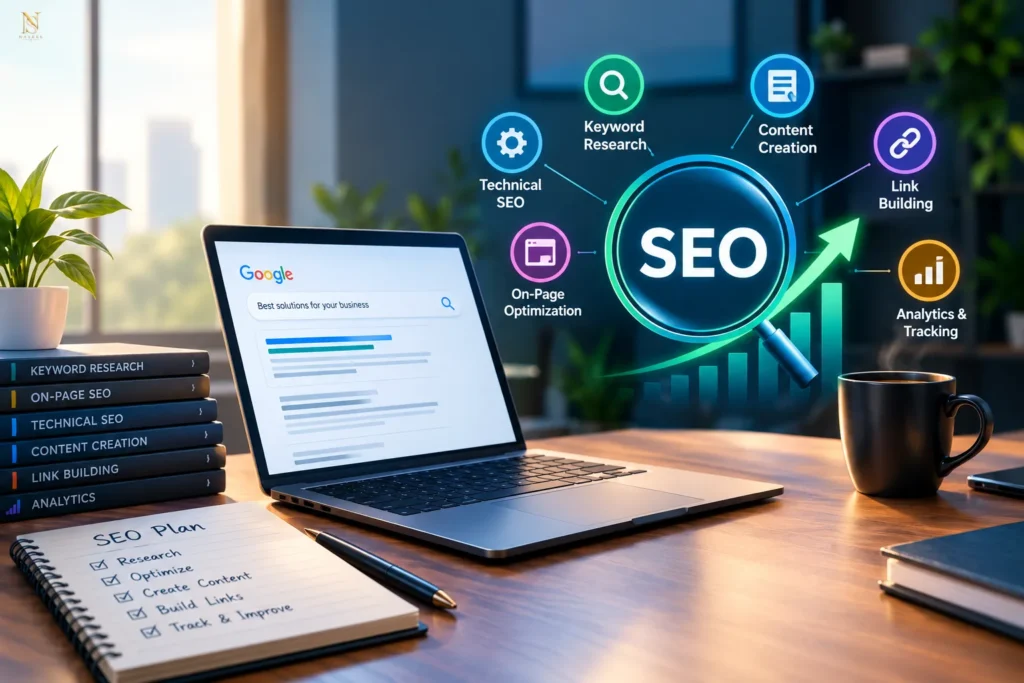
Ningal nalkiya image-il (Rank Math SEO box-il) focus keyword aayi nalkiyitulladh “SEO Strategies for Business Grow” ennadhanu.
Thazhe nalkiya text-il baki ullavayellam ottum mattathe, aavashyamulla jagangalil mathram aa exact keyword (“SEO Strategies for Business Grow”) cherthu rewrite cheythittund:
Search engine optimization, commonly known as SEO, is one of the most valuable long-term marketing channels for a business. When it is done well, implementing effective SEO Strategies for Business Grow helps the right people discover your website when they are actively searching for answers, products, services, or solutions. Unlike a campaign that stops when the budget runs out, a well-optimized website built with solid SEO Strategies for Business Grow can continue attractiAng qualified visitors for months or years.
However, SEO can feel complicated when you are new to it. Search engine algorithms evaluate numerous factors to determine page rankings and visibility. Businesses must understand their audiences, create useful content, improve website performance, earn trust, and measure results. The work is not about inserting a keyword into a page as many times as possible. It is about applying smart SEO Strategies for Business Grow that make a website genuinely helpful and easy for both people and search engines to understand.
This guide explains practical SEO Strategies for Business Grow in a beginner-friendly way. It covers keyword research, technical SEO, on-page optimization, content creation, local search, link building, user experience, analytics, and ongoing improvement. Whether you run a local shop, professional service, ecommerce store, startup, or established company, these SEO Strategies for Business Grow can help improve organic search visibility and attract more relevant traffic.
Important note: The focus keyword requested for this article is “SEO Strategies for Business Grow.” In natural English, many readers may also search for “SEO strategies for business growth.” This article uses the exact focus keyword where appropriate while also including the grammatically natural related variation so the content remains readable and useful.
What Is SEO and Why Does It Matter for Business?

Thazhe nalkiyirikunna text-il Ningalude “SEO Strategies for Business Grow” enna exact focus keyword natural aayi uthpaddippichu rewrite cheythittund. Content-nte artham maaratheyaanu ithu tayyarakiytulladh:
Search engine optimization, commonly known as SEO, is the process of improving a website and its content so search engines can discover, interpret, evaluate, and display its pages for relevant searches. The goal is not simply to achieve a high position for one term, but to apply effective SEO Strategies for Business Grow so your site becomes visible to people whose needs match what your business offers.
Imagine a potential customer searching for accounting software for small businesses. If your company provides that solution, implementing targeted SEO Strategies for Business Grow can place your brand on the first page in front of a highly relevant audience. If your page clearly explains the product, answers common questions, demonstrates value, and makes the next step easy, organic traffic can turn into valuable leads or sales.
SEO matters for several reasons:
It captures existing demand from individuals who are actively seeking answers for a distinct requirement or issue.
It builds credibility, as strong search visibility reinforces the impression that a business is established and trustworthy.
It compounds over time, meaning well-optimized web pages built with sound SEO Strategies for Business Grow generate ongoing traffic long after publication.
It reduces dependence on paid advertising by providing a balanced, sustainable acquisition mix alongside paid campaigns.
It supports every stage of the customer journey, from educational information and comparisons to specific product details and support resources.
It improves the website overall, as executing SEO Strategies for Business Grow encourages clearer navigation, faster pages, better content, and a stronger user experience.
SEO is not instant. A new page may take time to be discovered, indexed, and trusted. Highly competitive search terms often demand sustained effort over several months. That does not make SEO ineffective; it means applying proven SEO Strategies for Business Grow should be treated as a long-term business asset rather than a short-term trick.
Understanding How Search Engines Evaluate Pages
Thazhe nalkiyirikunna text-il Ningalude “SEO Strategies for Business Grow” enna focus keyword natural aayi ulpeduthi rewrite cheythittund. Content-nte artham maaratheyaanu ithu tayyarakiytulladh:
Search engines aim to provide the most useful result for a person’s query. Their systems consider many factors, including relevance, content quality, website accessibility, page experience, authority, freshness where appropriate, and the context of the search.
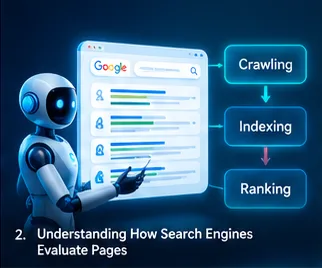
This overall process can be broken down into three key phases:
Crawling: Search engine systems discover URLs through links, sitemaps, references, and other signals. If a page is blocked, poorly connected, or technically broken, even the best SEO Strategies for Business Grow will struggle to get it discovered efficiently.
Indexing: After discovering a page, a search engine analyzes and stores information about its content. Indexing does not guarantee ranking. A page may be indexed but appear rarely if it does not provide a strong answer for relevant searches, which is why executing comprehensive SEO Strategies for Business Grow is necessary.
Ranking and serving: When someone searches, the search engine evaluates available pages and determines which results best match the query and the searcher’s likely intent. Results can differ depending on location, device, language, personalization, and the meaning of the query.
This is why successful SEO Strategies for Business Grow must address both technical access and human usefulness. A page that loads quickly but provides a shallow answer will struggle. Similarly, a brilliant article that search engines cannot crawl will fail to reach its intended audience without proper SEO Strategies for Business Grow.
Begin with a Clear SEO Goal

Before researching keywords or rewriting page titles, define the specific business outcome your organic marketing efforts should support. A website can easily gain more visitors without generating higher revenue if that traffic lacks intent or the page fails to convert.
Consider these critical questions:
Which products, services, or customer segments need to expand?
What profile represents your most valuable visitor?
Which geographic markets are most important to target?
What action should an organic visitor take after landing on your site?
How will overall success be measured?
A clear goal might involve increasing qualified consultation requests, boosting ecommerce revenue from non-branded searches, booking local appointments, generating software demos, or lowering support costs through helpful guide content. Aligning your SEO Strategies for Business Grow with these specific targets ensures every optimization effort drives commercial value.
Next, link these objectives to measurable performance indicators. Useful metrics include organic impressions, clicks, non-branded traffic, qualified leads, online transactions, conversion rates, revenue, phone calls, or direction requests. Search rankings serve as valuable diagnostic indicators, but they are not the ultimate business benchmark.
Having well-defined goals also guides resource allocation. If a company requires local appointments, location-specific pages and Google Business Profile management take priority over broad content campaigns. Conversely, if a company offers a complex B2B service, in-depth educational resources and case studies deliver far better results than high volumes of short articles. Implementing targeted SEO Strategies for Business Grow in this structured way guarantees that your content attracts genuine business opportunities rather than passive traffic.
Keyword Research: Find the Language of Your Customers

Keyword research involves discovering the specific words and phrases people type into search engines when looking for information, products, or services. Effective keyword research goes beyond building a massive list; it focuses on analyzing search volume, user intent, competitor landscape, and the precise language that connects searchers to your offer.
Start with Customer Pain Points
Begin by compiling the exact questions and terms prospects use throughout their decision-making process. Sales emails, customer support tickets, online reviews, forum discussions, internal site search data, and client interviews serve as rich sources of insight.
For instance, an irrigation company might uncover search queries such as:
How much water does a garden need?
How to install drip irrigation?
Best irrigation system for a small greenhouse
How to reduce outdoor water use
Drip irrigation repair near me
These queries reflect varying stages of user interest, from top-of-funnel educational research to high-intent commercial requests. Integrating these target phrases into comprehensive SEO Strategies for Business Grow ensures that your content addresses real customer demand at every phase.
Understand Search Intent
Search intent defines the underlying purpose driving a user’s query. The main categories include:
Informational intent: Searchers want answers, guides, or general knowledge.
Navigational intent: Searchers look for a specific website, tool, or brand page.
Commercial investigation: Searchers compare products, read reviews, or evaluate options before buying.
Transactional intent: Searchers are prepared to make a purchase, book a service, or submit an inquiry.
Local intent: Searchers need a nearby business or location-based service.
Your website pages must align directly with what searchers expect to find. A user querying “what is technical SEO” expects an informative breakdown rather than a hard sales pitch. Conversely, a user searching for “emergency plumber near me” requires immediate service details, contact numbers, local proof, and clear action steps. Aligning search intent with overall SEO Strategies for Business Grow is crucial for converting organic traffic into actual business growth.
Balance search volume and relevance
High-volume terms can look attractive, but they may be broad, highly competitive, and difficult to convert into actual customers. In contrast, a more targeted phrase may attract lower search volumes while generating far more qualified leads for your business.
For example, “shoes” is extremely broad, whereas “waterproof walking shoes for winter travel” is specific and reveals a clear user intent. A growing business can often achieve faster, more impactful results by targeting relevant long-tail phrases before attempting to rank for broad, high-competition keywords.
Build Keyword Groups
Group related search phrases by core topic and user intent rather than creating a separate page for every minor variation. A single page focusing on “local SEO for restaurants” can naturally address related queries about restaurant Google profiles, map visibility, local rankings, and online reviews. Creating individual pages for every minor variation often leads to thin or repetitive content. Always treat keyword research as a strategic guide rather than strict writing instructions—the final content should read naturally and address the searcher’s needs effectively.
Create an SEO-Friendly Site Structure
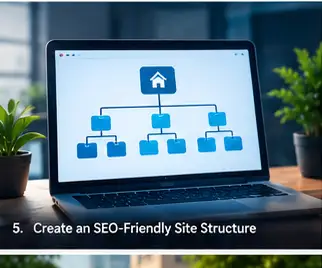
A clean website architecture directly influences both user experience and search engine accessibility. A logical layout allows visitors to navigate seamlessly while helping search crawlers index crucial pages through internal link paths.
A balanced structure typically includes:
Home
Products or Services
Industry or Audience Solutions
Educational Resources & Blog Content
Case Studies & Success Stories
About Us
Contact Information
Support & FAQ Pages
Use descriptive navigation labels where appropriate. While broad terms like “Services” are common, clearer labels like “Small Business Accounting,” “Commercial Cleaning,” or “Website Design” provide better context. Keep high-priority pages within a few clicks of the homepage, avoiding isolated pages or complex scripts that block crawlers. Incorporating these structural improvements into your overall SEO Strategies for Business Grow ensures that both search engines and potential clients can navigate your site effortlessly.
Use Internal Links Strategically
Internal linking connects related resources across your website, helping visitors continue their buyer journey while signaling page relationships to search algorithms.
For instance, an educational post on “how to prepare for a tax consultation” can naturally link to a dedicated small business tax planning service page, a downloadable checklist, or a relevant client case study. Use descriptive, context-rich anchor text rather than generic phrases like “click here.” When implemented thoughtfully, internal linking serves as one of the most effective SEO Strategies for Business Grow to distribute page authority and keep readers engaged.
Plan categories carefully
In ecommerce and content-heavy websites, categories should be meaningful and stable. Avoid creating dozens of nearly identical categories that offer little value to users. A smaller number of strong category pages is often easier to manage and improve.
Site structure is one of the most practical SEO Strategies for Business Grow because it creates value across the entire website. It improves navigation, distributes internal authority, supports topical relevance, and makes future content easier to organize.
Technical SEO Foundations for Beginners
Technical SEO refers to the behind-the-scenes factors that help search engines access and understand a website. You do not need to be a developer to understand these main areas, although applying these technical SEO Strategies for Business Grow requires careful review before implementation.
Make the Site Crawlable
Check that important pages are not accidentally blocked by robots.txt rules, noindex directives, login requirements, broken links, or poor navigation. Submitting an XML sitemap featuring canonical and indexable URLs is one of the foundational SEO Strategies for Business Grow to ensure proper site indexing.
Use HTTPS
HTTPS establishes an encrypted data connection between website visitors and the server. It is an expected standard for modern websites, especially when forms, payments, or personal details are involved. Ensuring redirects send visitors from old HTTP versions to secure HTTPS URLs stands among essential SEO Strategies for Business Grow for building user trust.
Improve Mobile Usability
With most users accessing websites via mobile, pages must feature legible text, clickable buttons, responsive layouts, and smooth forms. Implementing mobile-first SEO Strategies for Business Grow is not just a ranking consideration; it directly affects whether visitors complete key conversion actions.
Improve Page Speed
Slow-loading web pages frustrate visitors and lead to lower engagement rates. Reviewing large images, scripts, third-party tools, hosting performance, caching, and render-blocking code should be high-priority SEO Strategies for Business Grow for technical teams.
Prioritize speed enhancements on pages that receive high traffic or support conversions. Applying targeted SEO Strategies for Business Grow to major landing pages provides far more value than perfecting unused pages.
Manage Duplicate and Confusing URLs
Similar URLs create uncertainty about which page should rank in search results. Leveraging canonical tags, consistent internal links, redirects, and clean URL structures are proven SEO Strategies for Business Grow to resolve duplicate content issues. Avoid changing URLs casually; when changes are necessary, plan redirects thoughtfully as part of your broader SEO Strategies for Business Grow.
Use Structured Data Appropriately
Schema markup delivers machine-friendly context regarding a webpage, detailing items such as products, blog posts, events, local services, customer feedback, or FAQ sections. Integrating schema markup into your SEO Strategies for Business Grow helps search engines understand visible content better. Remember that using schema as part of your SEO Strategies for Business Grow enhances search clarity, though it does not guarantee rich snippets automatically.
On-Page SEO: Optimize the Page People Actually Read

On-page SEO targets a webpage’s visible content and backend HTML code. Its primary goal is to enhance readability and user comprehension, ensuring the text remains natural and engaging while implementing effective SEO Strategies for Business Grow.
Write a Useful Title Tag
The title tag serves as a primary signal of what a page covers and frequently functions as the main clickable headline in search engines. Constructing clear title tags is one of the most foundational SEO Strategies for Business Grow. Make titles specific, accurate, and appealing, placing primary topics naturally near the beginning.
A weak title might be “Our Services.” A stronger title could be “Residential Solar Panel Installation | Safe, Local Energy Solutions.”
Create a Compelling Meta Description
While meta descriptions do not directly boost rankings, writing action-oriented descriptions remains among necessary SEO Strategies for Business Grow to improve click-through rates. Summarize the page’s main value, match search intent, and give readers a compelling reason to visit without making false claims.
Use One Clear H1 Heading
The main heading (H1) should clearly reflect the central topic of the page. While it does not need to match the title tag word-for-word, both must remain aligned. Organizing content with structured H1, H2, and H3 headers is one of the most effective SEO Strategies for Business Grow to make pages scannable.
Place the Main Answer Early
Avoid forcing visitors to scroll through long introductory paragraphs before addressing their core question. Presenting clear answers upfront serves as one of the best user-centric SEO Strategies for Business Grow, particularly for informational search queries.
Use Related Keywords Naturally
Incorporating secondary keywords gives search engines comprehensive topic context. When executing SEO Strategies for Business Grow, related terms like organic traffic, search rankings, site optimization, content strategy, local search, technical SEO, link building, conversion rate, and Google Search Console enrich the text naturally. Avoid forcing keywords into irrelevant sections; natural language provides far greater value than repetitive phrasing.
Improve Readability
Enhancing content layout through short paragraphs, descriptive subheadings, numbered steps, bullet points, and visual breaks stands among proven SEO Strategies for Business Grow for reducing bounce rates. Explain technical terms simply and tailor the tone to your audience’s technical level.
Adopting readable layouts as part of your SEO Strategies for Business Grow does not mean stripping away detail—it means presenting comprehensive details in a structure people can easily digest and act upon. Finally, regularly reviewing readability ensures your SEO Strategies for Business Grow deliver long-term engagement.
Content Marketing and SEO: Build Pages Worth Finding
Content is one of the strongest foundations for sustainable organic visibility. Producing a higher volume of blog posts alone does not equate to a successful content plan. Each important piece should have a clear audience, purpose, topic, evidence, and next step.
Create topic clusters
A topic cluster contains a comprehensive pillar page and related supporting pages. For example, a business selling project management software might build a cluster around project planning. Supporting pages could cover project planning templates, project planning mistakes, planning for remote teams, project scope examples, and project planning software comparisons.
The cluster demonstrates depth and gives users multiple ways to enter and continue their research.
Add first-hand value
Many websites repeat information that already exists. To make content more useful, add something that comes from your experience:
- A customer example
- A process tested by your team
- Original observations
- A checklist or template
- A comparison based on real use
- An explanation of common mistakes
- A transparent discussion of limitations
- Data collected from your own work
Providing unique, firsthand insights establishes trust and prevents your content from blending in with standard online articles.
Match content to the buying journey
A beginner guide may attract early-stage visitors. A comparison article can help people evaluating solutions. Detailed real-world case studies can effectively drive final purchasing decisions. A setup guide can help customers succeed after purchase. Build content for multiple stages rather than publishing only top-of-funnel articles.
Update important content
Information, products, regulations, prices, and best practices change. Periodically audit high-performing pages that drive substantial web traffic or key business conversions. Update outdated examples, broken links, screenshots, references, and calls to action. If a page no longer serves a purpose, consolidate or retire it carefully.
Local SEO for Location-Based Businesses
Local SEO helps businesses appear when people search for products or services in a particular place. It is especially important for clinics, restaurants, tradespeople, retailers, professional firms, and service providers that work within a geographic area.
Complete your business profile
Set up and regularly update an accurate business profile across leading local discovery platforms in your industry. Use the correct business name, address, phone number, website, categories, hours, services, and photographs. Keep information consistent across important directories.
Create useful location pages
Dedicated location pages must offer value beyond simply mentioning a city’s name. Provide explicit information regarding your local offerings, intended customers, step-by-step processes, regional connection, and clear guidance on how potential clients can reach out or engage with your services.
contact or visit you. Avoid producing dozens of nearly identical pages with only the place name changed.
Earn and respond to reviews
Reviews influence trust and can support local visibility. Ask satisfied customers for honest feedback in a respectful way. Address both favorable and critical feedback with a polite, constructive, and professional tone. Do not argue, disclose private information, or offer rewards in ways that violate platform policies.
Build local relevance
Participate in genuinely relevant local activities, partnerships, events, and organizations. Local mentions and links can be valuable when they reflect real relationships rather than artificial directory submissions.
Local SEO is one of the most actionable SEO Strategies for Business Growth because a strong local presence can connect online discovery with phone calls, visits, bookings, and in-person sales.
Link Building: Earn Authority Through Relevance
Links from other websites can help search engines discover pages and understand that a website is referenced by others. The best link building is based on genuine value and relationships, not volume alone.
Create link-worthy resources
Useful assets may include original research, local data, detailed guides, tools, calculators, templates, expert commentary, case studies, and visual explanations. People are more likely to reference a resource that saves them time or supports their own work.
Build real relationships
Connect with industry publishers, associations, complementary businesses, journalists, educators, and community organizations. Offer useful expertise, accurate information, or a relevant resource. Do not expect every conversation to produce a link.
Promote content thoughtfully
When you publish something genuinely useful, share it with people who may find it relevant. Personalized outreach is more effective than sending the same generic message to hundreds of websites. Explain why the resource may help their audience.
Avoid risky shortcuts
Be cautious with paid links intended to manipulate rankings, large-scale guest-post networks, irrelevant directory schemes, automated comments, and agreements that require unnatural anchor text. Temporary boosts often result in lasting complications and harm your overall trustworthiness.
A relevant link from a trusted source is generally more valuable than many unrelated links. Authority grows through usefulness, reputation, and consistent work.
User Experience and Conversion: SEO Should Lead Somewhere
Driving organic traffic is only part of the job. The website must help visitors complete the next meaningful action. This might be making a purchase, requesting a quote, booking an appointment, subscribing, calling, downloading a guide, or learning how to use a product.
Review each important page with these questions:
- Is the purpose clear within a few seconds?
- Does the page match the searcher’s intent?
- Is the main benefit easy to understand?
- Are common objections answered?
- Is there credible evidence?
- Is the form asking for only necessary information?
- Does the visitor know what happens after taking action?
Use analytics to find pages where many visitors arrive but few continue. Combine the data with customer interviews, support questions, sales objections, surveys, and usability observation. A high exit rate does not always mean a problem; a visitor may leave satisfied after finding a phone number or answer. Context matters.
SEO and conversion optimization should cooperate. A page that earns a ranking but fails to help users can lose engagement and business value. A page that converts strongly but is invisible cannot reach enough qualified people. The strongest approach improves both discoverability and usefulness.
Measuring SEO Performance Correctly
Evaluating SEO success requires a multi-faceted approach, as a standalone analytics report cannot provide complete insight.
Visibility metrics
These include impressions, ranking trends, indexed pages, search appearance, and brand versus non-brand visibility. While these indicators confirm that search platforms are displaying your pages, they fail to demonstrate the actual quality or intent of the incoming traffic.
Traffic metrics
Review organic sessions, landing pages, search queries, device types, locations, engagement, and returning visitors. Look for patterns by topic and intent rather than focusing only on the total number of sessions.
Conversion metrics
Track form submissions, calls, purchases, bookings, sign-ups, downloads, demo requests, and other meaningful actions. Connect conversions to revenue or lead quality when possible.
Business metrics
At a strategic level, evaluate SEO against competing marketing channels by analyzing revenue generated, customer retention rates, profit margins, and overall acquisition costs. Some SEO content creates value indirectly by helping a customer before the final conversion. Use assisted-conversion analysis, customer surveys, and CRM data to understand this influence.
Use a learning cycle
Every month or quarter, ask:
1.What did we expect to happen?
2.What actually happened?
3.Which pages or queries changed most?
4.What customer behavior surprised us?
5.What could explain the result?
6.What will we update, test, create, or stop next?
This turns SEO from a checklist into a learning system.
A 90-Day SEO Action Plan for Beginners
If SEO feels overwhelming, begin with a focused 90-day plan.
Days 1–15: Audit and prioritize
List your most important products, services, audiences, and locations. Review the current website, analytics, search performance, page speed, mobile experience, indexation, broken links, titles, headings, and calls to action. Identify the five pages with the greatest business potential.
Days 16–30: Research and map keywords
Interview customers and collect their language. Build a keyword list around real problems, products, services, locations, and questions. Group keywords by intent and map each important group to an existing page or a planned new page. Avoid assigning every variation to a separate page.
Days 31–60: Fix the foundations
Improve technical issues that prevent crawling or create a poor experience. Rewrite priority title tags, meta descriptions, H1 headings, introductions, internal links, and calls to action. Improve important pages for mobile usability and speed. Make contact, pricing, service, and location information easy to find.
Days 61–90: Publish and learn
Create one high-value guide and several supporting resources. Incorporate real-world case studies, practical illustrations, frequently asked questions, and strategic contextual links. Promote the content to relevant audiences and partners. Monitor impressions, clicks, engagement, conversions, and customer feedback. Update the next set of pages based on evidence.
Do not judge the entire SEO program after a few days. Use the first 90 days to establish quality, consistency, measurement, and a realistic baseline.
.
Common SEO Mistakes to Avoid
Keyword stuffing
Repeating the same phrase unnaturally makes content unpleasant to read and does not create relevance. Use the focus keyword where it clarifies the topic, then write naturally with related terms and helpful explanations.
Publishing thin content
Short pages are not automatically bad, but pages that say very little, repeat existing information, or exist only to target a keyword rarely provide lasting value. Answer the question completely for the intended audience.
Ignoring search intent
A page can target the right words and still fail if it provides the wrong type of information. Study what searchers are trying to accomplish before choosing a format.
Creating duplicate location pages
Changing only the city name across many pages can create repetitive, low-value content. Add genuinely local information or focus on fewer, stronger pages.
Buying questionable links
Manipulative link schemes may create risk and rarely build a durable reputation. Acquire high-quality backlinks organically by producing valuable assets, sharing industry knowledge, collaborating with partners, and engaging in genuine community outreach.
Forgetting existing pages
Creating new content while old pages remain outdated can spread resources too thin. Improve pages that already have authority, impressions, traffic, or conversions.
Measuring only rankings
Rankings change by location, device, query, and personalization. Combine ranking observations with organic traffic, qualified actions, revenue, and customer outcomes.
Expecting immediate results
SEO needs time for content to be discovered, evaluated, improved, and trusted. Continue monitoring, but avoid making major decisions from very limited data.
Final Thoughts on SEO Strategies for Business Grow
The most effective SEO Strategies for Business Grow are not based on shortcuts or keyword repetition. They are based on understanding customers, creating genuinely useful pages, making websites accessible, earning trust, and improving the experience over time.
Start with a clear business goal. Research the words and questions your customers use. Organize the website logically. Fix technical barriers. Write clear titles and headings. Build content that includes original insight and practical value. Strengthen local visibility when location matters. Earn relevant links through useful work. Make the conversion path simple. Measure outcomes rather than vanity metrics.
The phrase “SEO strategies for business growth” may describe the goal more naturally, but the underlying principle is the same: search visibility should create meaningful business progress. More traffic is valuable only when it reaches the right people and helps them take the next step.
SEO is a long-term investment. It rewards businesses that are patient enough to learn, disciplined enough to improve, and customer-focused enough to produce something worth finding. When those qualities are built into the website and the marketing process, organic search can become more than a source of clicks. It can become a dependable channel for discovery, trust, leads, sales, and sustainable growth.
Quick SEO Checklist
Use this checklist when reviewing your website:
Is the primary audience clearly defined?
Does every key page serve a distinct and well-defined goal?
Does the page match the searcher’s intent?
Is the focus topic reflected naturally in the title and H1?
Does the meta description accurately encourage a click?
Are headings clear and logically structured?
Does the content answer the question thoroughly?
Are related keywords used naturally?
Are important pages internally linked?
Can search engines crawl and index the right URLs?
Does the website work well on mobile devices?
Are pages fast enough for a comfortable experience?
Is there credible evidence near important claims?
Is the call to action properly aligned with where the reader is in their buying journey?
Are local business details accurate where relevant?
Is the content original, accurate, and updated?
Are SEO results connected to leads, sales, or customer value?
Originality statement
This article was written as an original piece for this request. It was not copied from a single source or intentionally paraphrased from another article. Before publication, review the article for your organization’s specific claims, add verified first-hand examples, and cite external sources if you include statistics, quotations, regulations, or third-party research.
- Author Name: Naseel.p
- Website: https://marketingbynaseel.online/